Aa Bb Cc 01
Back to workCASE · ROBUSTA
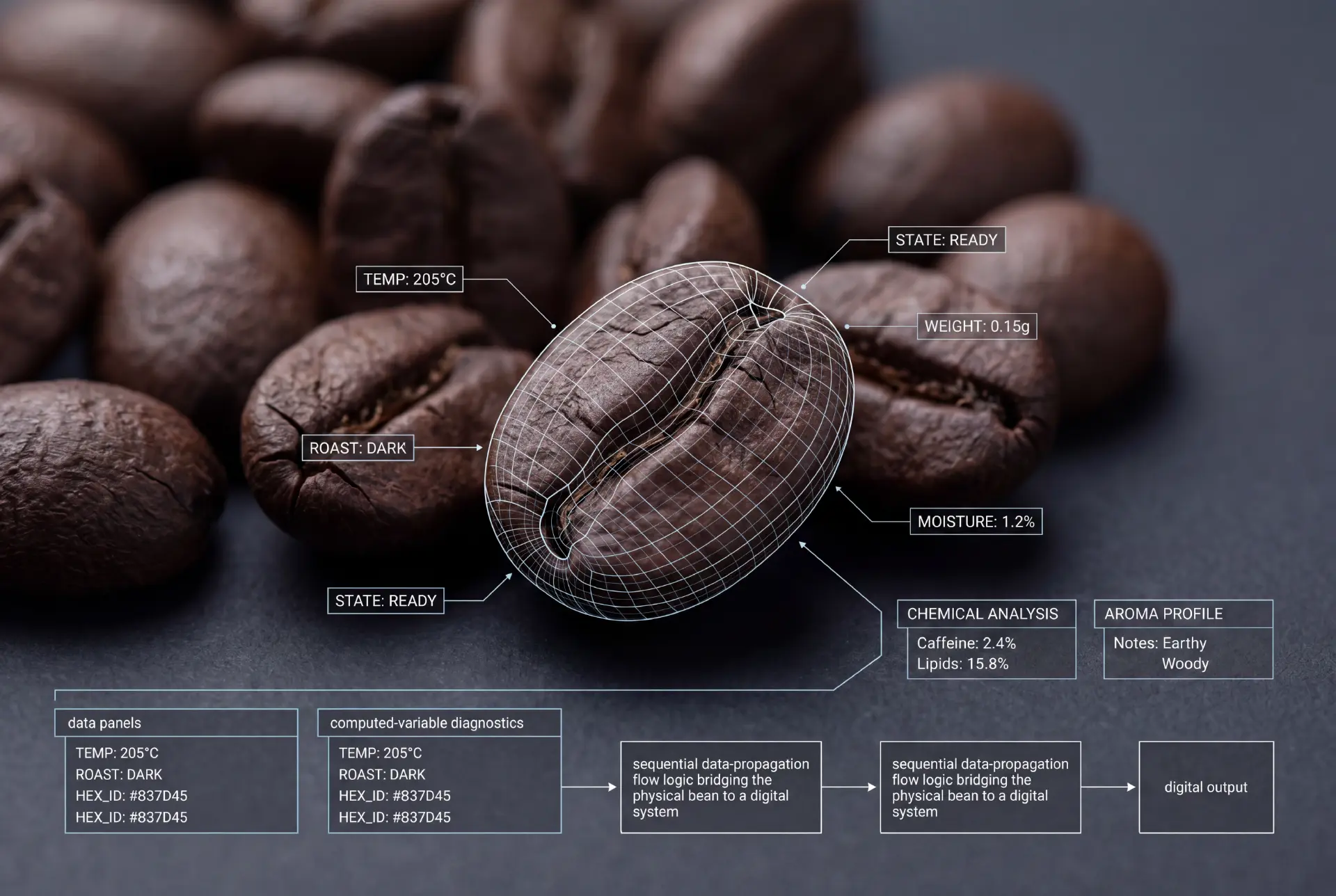
P-02 · ROBUSTA
Robusta Coffee House
Specialty coffee identity, packaging, and mobile ordering system.
- Category
- Brand · Packaging
- Year
- 2022
§ S-01
Phase 01: Product context
SYSTEM_STATE: Ecosystem Unification
The project required translating a specialty-coffee brand into a coherent consumer product experience spanning discovery, customization, ordering, and fulfillment.
Consumers required a unified digital ecosystem to discover products, customize drinks, understand ingredients, place orders, and track fulfillment with a clearer, more streamlined interaction flow.
The objective was to architect a comprehensive system that translated the physical precision of the product and the operational constraints of the physical store into a coherent digital workflow.
§ S-02
Phase 02: User needs & discovery
DIAGNOSTIC: Qualitative Insights & Competitive Review
To define the system architecture, research was conducted to map user behaviors, preferences, and operational constraints within the existing market.
- FINDING 01
Parameter Control & Situational Awareness
User research identified strong demand for granular drink customization and clear post-order visibility.
- FINDING 02
Fulfillment Asynchrony
Analysis exposed a critical desynchronization between digital order ingestion, physical kitchen throughput, and user transit velocity (e.g., generic ETA windows ignoring user distance).
- FINDING 03
Competitive Review
Competitive review exposed opportunities around personalization, integrated coffee tools, and customization depth without relying on nested menus.
§ S-03
Phase 03: Product architecture
ROUTING: Structured Task Flows & Information Hierarchy
To support multiple customization parameters without making the transaction flow cumbersome, the information architecture was structured hierarchically.
Core Transaction Pathway
- 01Authentication
- 02Category Selection
- 03Product Detail
- 04Parameter Customization
- 05Cart Aggregation
- 06Checkout / Payment
- 07Order Tracking
Systemic Fulfillment Logic
- 01User Travel Time + Store Prep Time
- 02System Decision (Hold/Brew)
- 03Arrival-Aware UI Status
Navigation Matrix: The architecture utilized a bottom-tab navigation system (Home, Rewards, Cart, Profile) to anchor the user, ensuring immediate access to loyalty status and order history without breaking the primary transaction flow.
§ S-04
Phase 04: Product experience
INTERACTION LOGIC: Parameter Control & Product States
The application translated the brand system into the core ordering and customization experience, prioritizing the relationship between digital input and physical operations.
Screen index03 / 13 · Home
- Screen
- Home
- Product
- :
- Cart
- 0 items
- History
- 0 deep
Thirteen screens, one component system. Size, milk, temperature and shot count set on Customize propagate through Cart, Payment and Tracking the totals are computed, not drawn. Every tap target is a real button: Tab through the frame, arrow keys move the index.
MODEL 01Travel syncing
Fulfillment timing compares user travel estimates against live queue conditions to determine when an order should hold, proceed, or accelerate.
INPUT
Travel ETA
transit velocity · route distance
Live queue state
open tickets · station throughput
PROCESS
Hold / brew decision
traffic buffer · hurry up override
OUTPUT
Arrival-aware status
held · brewing · ready on arrival
MODEL 02Arrival triggers
Fulfillment logic compares transit telemetry against queue times to trigger delayed holds for optimal product freshness.
INPUT
Macro-fence
3 minutes out · pre-stage ticket
Micro-fence
10 feet out · pickup proximity
PROCESS
Beverage physics
crema decay · foam stability · dilution
OUTPUT
Preparation trigger
release to station · notify user
MODEL 03Data parsing
Customization inputs are parsed into structured order data that feeds both the barista ticket and customer-facing nutrition interface.
INPUT
Customization input
modifiers · volumes · ratios
PROCESS
Recipe-to-matrix parser
baseline recipe matrix → resolved build
OUTPUT
KDS output
build steps only · zero-clutter ticket
Customer HUD
stage indicator · nutrition readout · ETA
§ S-05
Phase 05: Visual & component logic
INTERFACE DESIGN: Token Constraints & Visual Execution
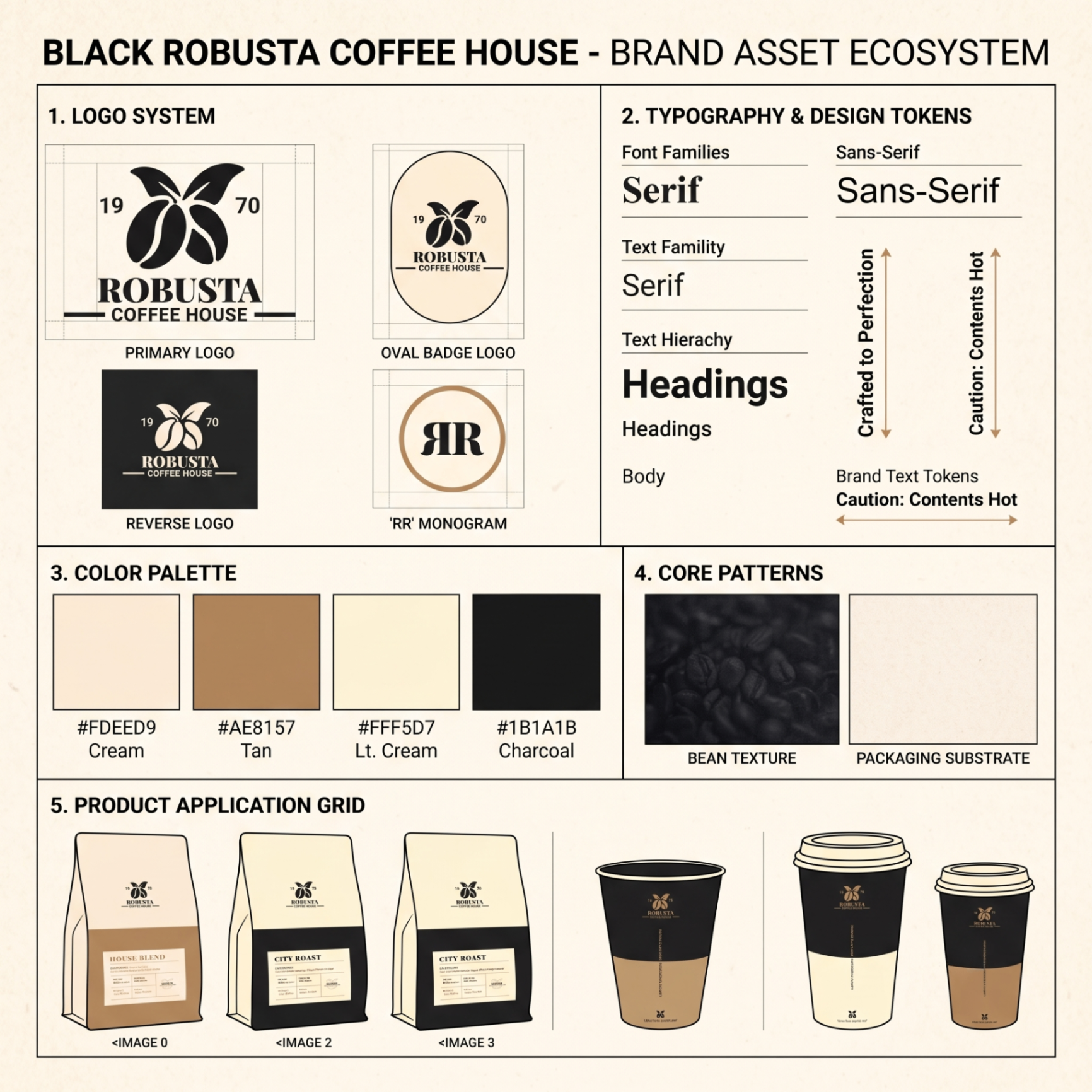
The brand and interface were built on a highly constrained token set, with every surface, accent, and type role assigned a single deterministic function.
Substrate · charcoal#181A1B
Surface · cream#FFF7EF
Highlight · warm white#FDEED9
Accent · tan#A88157
Aa Bb Cc 01
Typography: Engineered for distinct operational hierarchy, utilizing a high-contrast serif for display/wordmarks and a neutral geometric sans-serif for high-legibility interface data and button labels.
§ S-06
Phase 06: Diagnostic retrospective
EVALUATION: System Vulnerabilities & Iteration
Treating the brand mark as a reusable component supported scalability across digital and physical substrates. However, relying on a single accent token (Tan) for all interactive weight across the application introduces potential edge-case ambiguity.
In future iterations, reserving a secondary semantic token strictly scoped to warning and error states would remove this ambiguity without diluting the stark, minimalist brand logic.
§ S-07
Phase 07: Ownership & outcomes
EXECUTION: PRODUCT & INTERACTION ARCHITECTURE
- Consumer Product Architecture
- Designed the mobile ordering experience across discovery, customization, checkout, tracking, and fulfillment.
- Computational Product Logic
- Designed the interaction logic for parameterized customization, nutritional calculation, and arrival-aware order timing.
- Physical-Digital Fulfillment Model
- Mapped user travel, preparation timing, ticket queues, geofencing triggers, and fulfillment states into a unified product model.
- System Prototyping & Specification
- Developed the interactive prototype and supporting system models that connected consumer-facing interactions with modeled physical operations.
Outcome
Unified customization, arrival-aware fulfillment, and physical preparation constraints into a coherent consumer product system.